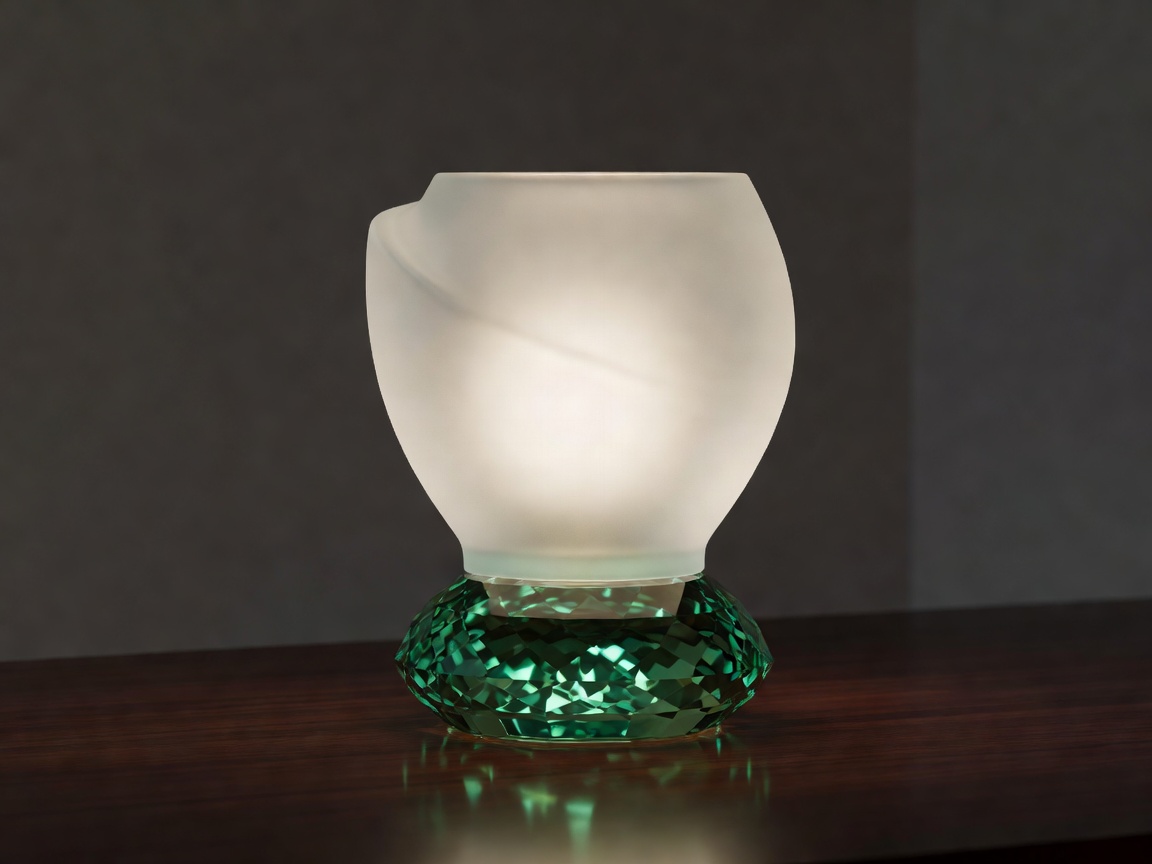
The Architectural Genesis: Gio Ponti and the Glass Renaissance
In 1932, visionary architect Gio Ponti was collaborating with Luigi Fontana, a leading Milanese industrial processor of commercial plate glass. Ponti recognized an unexploited aesthetic potential: industrial plate glass, typically reserved for shop windows and architectural glazing, possessed immense refractive weight and refractive clarity when treated as a sculptable decorative medium.
Partnering with Pietro Chiesa, an exceptional Milanese master of art glass and stained glazing, Ponti formed FontanaArte as an artistic division. From its very inception, FontanaArte occupied an elevated space: neither pure handcrafted Murano fragility nor cold anonymous mass production, but an architectural synthesis of thick ground crystal, beveled edges, and burnished cast brass fittings.
Max Ingrand and the Archetypal Fontana Luminaire (1954)
Following Ponti and Chiesa’s foundational decades, renowned French stained-glass artisan Max Ingrand assumed artistic direction in 1954. During his tenure, he penned what is widely revered as the quintessential table lamp: the Fontana 1853.
What set the Fontana apart was its seamless, dual-blown white frosted glass morphology. Rather than confining the light bulb to the upper shade, Ingrand installed illumination inside both the base and the shade, wired to triple-circuit switching. An interior architect could illuminate the shade alone for direct reading, illuminate the translucent base for a ghostly architectural pedestal glow, or activate both simultaneously for full room ambiance.
Material Craftsmanship: The FontanaArte Repertoire
FontanaArte’s distinct presence stems from manufacturing procedures that standard stamped-metal producers cannot replicate:
- Extra-Thick Float Glass Slabs: Pieces like the Luminator (1933) and Pietro Chiesa’s Cartoccio utilized heavy glass sheets ground and beveled by hand to catch ambient perimeter highlights.
- Architectural Acid Etching: Diffusers were dipped in acid baths multiple times to achieve an ultra-smooth velvety tactile surface that completely softens diode and filament hotspots.
- Thermal Bonding & Brass Mountings: High-tolerance milled brass hardware allowed cold glass plates to withstand expansion during thermal cycling without cracking.
Iconic Design Catalogue
| Model | Year | Designer | Material Character | Architectural Role |
|---|---|---|---|---|
| Bilia | 1932 | Gio Ponti | Brushed Brass Cone, Frosted Opal Glass Sphere | Geometric balance study; soft perimeter ambient |
| Luminator | 1933 | Pietro Chiesa | Lacquered Brass / Metal Fluted Torchère | The original indirect residential torchère |
| Fontana 1853 | 1954 | Max Ingrand | Mouth-blown white satin opaline glass | Tri-light spatial anchor and reading lamp |
| Tavolo con Ruote | 1980 | Gae Aulenti | 15mm Float Glass, Industrial Castor Wheels | Iconic intersection of raw logistics and pristine glass |
Architectural Merits & Specification Caveats
Material Strengths
- Sensual Refraction: Unmatched depth of light transmission; glass edges refract natural room daylight when turned off.
- Chemical Permanence: Opal glass diffusers never yellow, fade, or oxidize under prolonged solar UV exposure.
- Sculptural Solidity: Substantial material mass prevents accidental tipping in residential and boutique hotel suites.
Material Caveats
- Handling Vulnerability: Heavy mouth-blown diffusers require specialized packing and delicate handling during maintenance.
- Thermal Sensitivities: Vintage halogen components must never exceed designated wattages to prevent glass thermal shock.
The Gae Aulenti Era and Contemporary Reinterpretation
In 1979, the appointment of Milanese architect Gae Aulenti brought an intellectual renewal to the brand. Aulenti injected industrial reality into bourgeois spaces, setting thick slabs of glass directly on industrial castors. Today, FontanaArte continues to produce these seminal models alongside contemporary collaborations, proving that Ponti’s 1932 thesis remains unbroken: true architectural illumination is born where heavy physical glass meets weightless light.